Athletes do not simply train harder — they recover smarter. Between competition cycles, the body accumulates micro-trauma in fascia, fluid stagnation in overworked tissue, and a nervous system tipped too far into sympathetic drive. Sports performance massage exists precisely at this intersection: a therapeutic discipline that treats the athletic body not as a machine to be pushed, but as a living system to be restored. At Whispering Wood, we approach this work as both structural science and elemental ritual — a practice of kinetic alignment that returns the body to its natural rhythm.
What Makes Sports Performance Massage Different
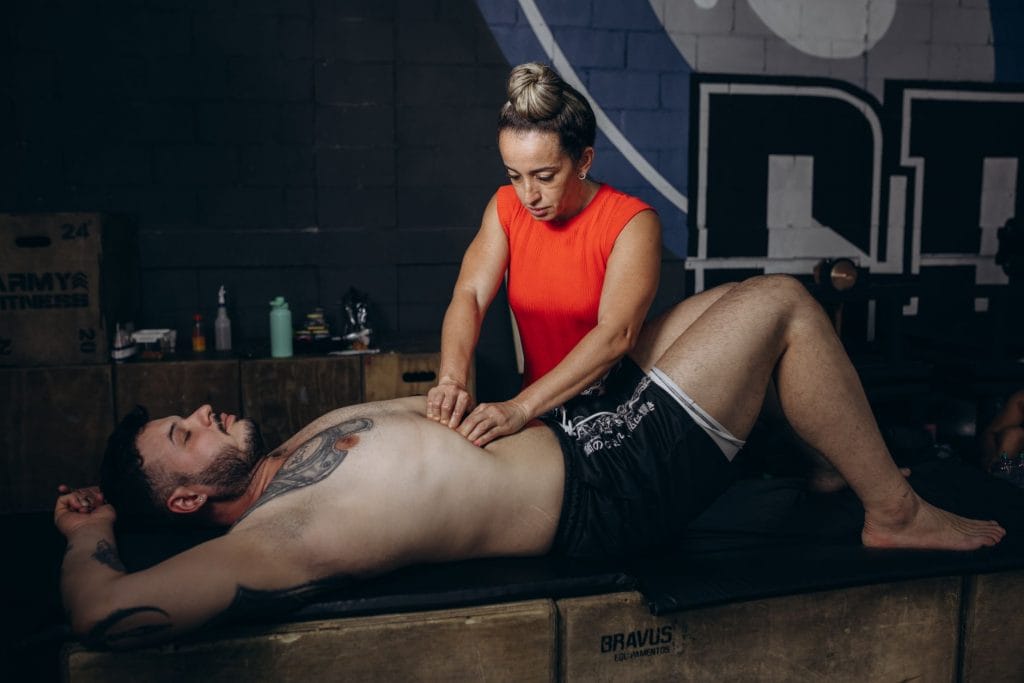
Unlike a purely relaxation-oriented treatment, sports performance massage is targeted, diagnostic, and responsive to the specific demands an athlete places on their body. Our practitioners assess gait patterns, muscular asymmetries, and areas of chronic guarding before ever placing a hand on the tissue. From there, the work moves through several distinct modes:
- Deep tissue and cross-fiber friction to release adhesions within overused muscle groups
- Myofascial release to restore glide between fascial layers that have become restricted from repetitive movement
- Compression and broadening strokes to flush metabolic waste and encourage fresh circulation into fatigued tissue
- Assisted stretching and joint mobilization to reclaim range of motion lost to training tightness
This is bodywork with intention — every stroke is chosen for its structural effect, not simply its sensory pleasure. Guests exploring our therapeutic massage offerings, including hot stone and bamboo modalities, will find these same principles woven throughout, adapted to the density and needs of trained muscle.
Why Faster Recovery Begins in the Nervous System
It is a common misconception that recovery is purely muscular. In truth, the nervous system governs how quickly the body can shift from a catabolic, high-alert training state into the parasympathetic mode required for repair, protein synthesis, and tissue regeneration. An athlete who trains intensely but never fully downshifts out of sympathetic dominance will accumulate fatigue faster than their body can clear it — regardless of how disciplined their training program is.
This is where our approach diverges from conventional sports rubdowns. We treat the nervous system reset as inseparable from the muscular one. Slow, grounded pressure at the close of a session, paired with breath cueing and stillness, signals safety to the vagal system — allowing true somatic release to take hold rather than a temporary loosening that reverts within hours.
Signs an Athlete’s Nervous System Needs Attention
- Persistent muscle tightness that returns quickly after stretching
- Disrupted or unrefreshing sleep despite physical exhaustion
- Elevated resting heart rate or a sense of being “wired but tired”
- Reduced power output or coordination despite consistent training
The Elemental Approach to Structural Realignment
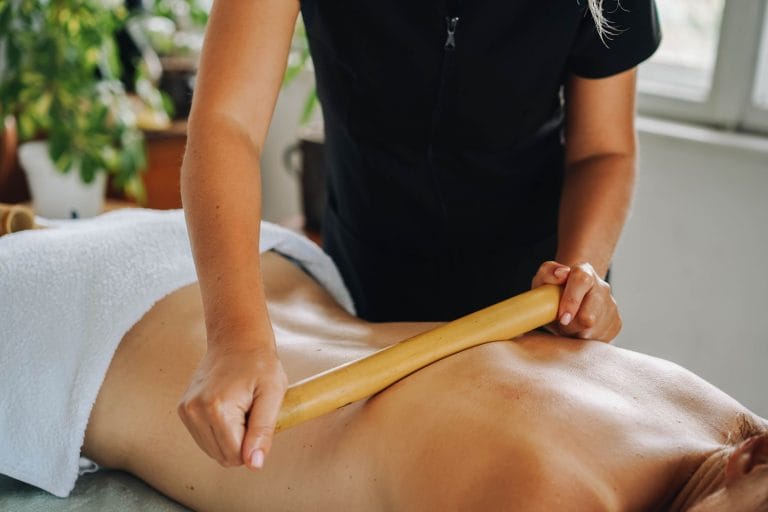
Our philosophy holds that the body responds most fully when treatment mirrors the elements it is built from — warmth to soften, pressure to ground, and rhythm to restore circulation. Heated basalt stones are used to pre-soften dense muscle before deeper structural work begins, reducing the discomfort typically associated with intensive tissue release. Bamboo tools allow for a rolling, wave-like compression along major muscle groups such as the quadriceps, hamstrings, and calves — mimicking the kneading of tide against shoreline rather than the abrupt intensity of elbow-driven pressure.
This elemental sequencing matters clinically, not just aesthetically. Tissue that is warmed and gradually engaged yields more readily, meaning we can reach deeper structural layers with less resistance and less post-treatment soreness — a critical distinction for athletes who need to train again within days, not weeks.
Building Recovery Into a Training Cycle
Sports performance massage delivers the greatest benefit when it is treated as a scheduled component of training, not an emergency response to injury. We generally guide athletes toward the following rhythm:
- 48–72 hours post-competition: lighter, circulation-focused work to clear metabolic byproducts without over-stressing already-fatigued tissue
- Mid-training-cycle: deeper structural sessions to address adhesions and asymmetries before they become chronic patterns
- Taper weeks: shorter, nervous-system-focused sessions that prioritize downregulation over deep tissue work
For athletes managing a demanding competitive calendar, we often recommend pairing bodywork with our holistic and energy-based therapies, such as reflexology, which support circulatory and nervous system balance between deeper structural sessions.
When Recovery Requires More Than a Single Session
Chronic overuse patterns, post-competition depletion, or the accumulated toll of a full season rarely resolve in a single hour on the table. For athletes seeking a genuine reset — not simply a temporary loosening — we recommend extending the work across a series of days, allowing tissue, fascia, and nervous system to recalibrate in stages rather than all at once. Our multi-day retreat experiences are structured with exactly this in mind, combining sequential bodywork, restorative cuisine, and restful lodging so the body has uninterrupted time to complete what a single treatment can only begin.
Complementary Rituals for Total-Body Reset
Many athletes find that pairing structural massage with a broader sensory ritual accelerates the shift into true rest. Our signature sensory journeys, which blend warmth, botanicals, and bodywork, are especially effective following a heavy training block, as they extend the parasympathetic benefits of massage into a fuller, multi-sensory experience of recovery.
Recovery as a Discipline, Not an Afterthought
The athletes who progress most consistently are rarely those who train the hardest — they are the ones who recover with the same rigor and intention they bring to their sport. Sports performance massage, practiced with structural precision and nervous-system awareness, is not indulgence. It is infrastructure. It is the quiet, deliberate work that allows the visible work of training to actually take hold.
If you are ready to build recovery into your training rhythm, we invite you to explore our full range of treatments and reserve a session designed around the specific demands your body carries. Reach out to our team at Whispering Wood Spa & Wellness Retreats, and let us help you recover with the same intention you bring to every mile, rep, and race.