Long before aromatherapy became a modern wellness vocabulary, rose and frankincense were burned in temples, steeped in oils, and pressed into the skin of those seeking communion with something quieter than the noise of daily life. At Whispering Wood Spa & Wellness Retreats, we return to these two botanicals again and again — not out of nostalgia, but because the science of scent confirms what ancient practitioners intuited millennia ago: certain aromatic molecules speak directly to the nervous system, inviting the body out of vigilance and into repose.
This is the terrain we explore in every treatment room — where elemental luxury meets somatic science, and where a single inhalation can begin to unwind the tension stored in breath, muscle, and mind.
The Olfactory Pathway: Why Scent Reaches the Brain So Directly
Unlike our other senses, smell bypasses the thalamus — the brain’s usual relay station — and travels straight to the limbic system, the seat of emotion, memory, and autonomic regulation. This is why a single note of rose or a wisp of frankincense smoke can shift a guest’s physiological state within moments, often before they are consciously aware of the scent at all. The amygdala and hippocampus, both intimately involved in stress response and memory formation, receive olfactory signals almost instantaneously, which is why aromatherapy can produce measurable calming effects with such immediacy.
Rose: A Regulator of the Nervous System
Rose otto, distilled from thousands of hand-harvested petals, contains citronellol and geraniol — compounds studied for their ability to lower cortisol levels and ease symptoms of anxiety. Clinical research on rose oil inhalation has documented reductions in blood pressure, respiratory rate, and subjective stress scores, particularly in settings involving grief, transition, or emotional overwhelm. In our own practice, we find rose to be less a fragrance than a form of permission — it seems to grant the body license to soften, to grieve, to exhale fully for the first time in days.
Frankincense: An Ancient Anchor for the Present Moment
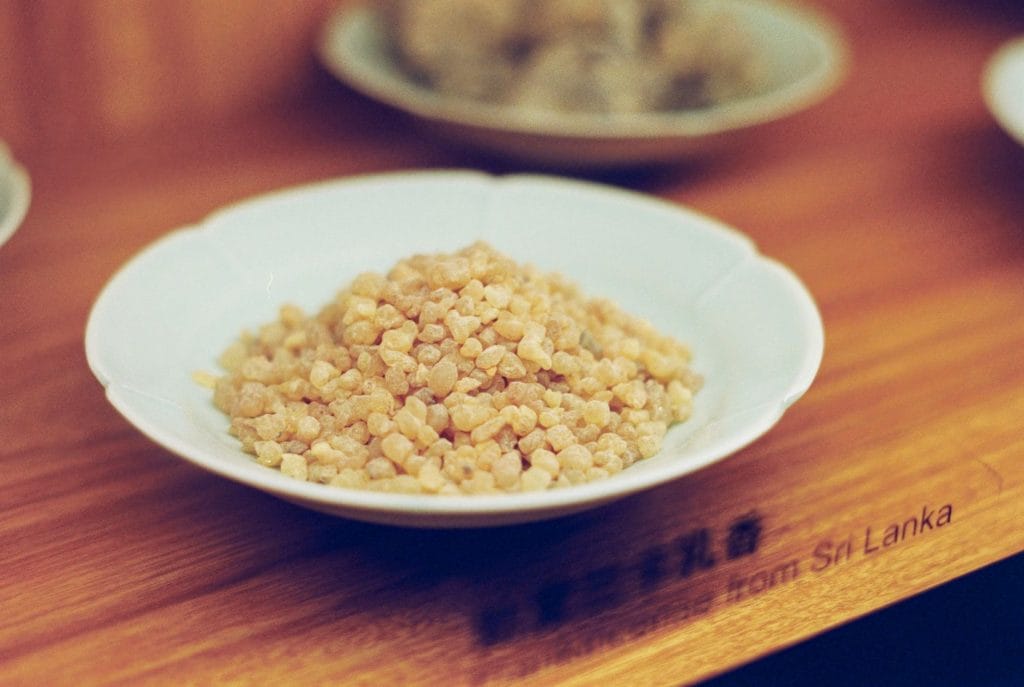
Frankincense resin, tapped from the Boswellia tree, contains incensole acetate — a compound shown in studies to activate ion channels in the brain associated with mood elevation and the reduction of anxiety-like behavior. Its warm, resinous depth has long been used in contemplative and ceremonial contexts precisely because it slows respiration and draws attention inward. Where rose opens the heart, frankincense grounds the body — together, they form a pairing of expansion and anchoring that we consider foundational to true somatic release.
The Physiology of Calm: What Actually Happens in the Body
When rose and frankincense are inhaled together, several measurable shifts tend to occur in sequence:
- Vagal activation — the vagus nerve, central to the parasympathetic “rest and digest” response, is stimulated by slow, aromatic breathing, encouraging a shift away from sympathetic fight-or-flight activation.
- Cortisol reduction — several small clinical trials have observed lowered salivary cortisol following extended exposure to rose-based aromatherapy, particularly in high-stress populations.
- Heart rate variability improvement — a marker of nervous system resilience, HRV has been shown to increase during and after aromatic inhalation sessions incorporating warm resins like frankincense.
- Muscular release — as the nervous system downshifts, held tension in the jaw, shoulders, and diaphragm frequently softens, which is why scent is so often paired with bodywork rather than used in isolation.
This is precisely why we never treat aromatherapy as an afterthought or a pleasant garnish. It is a physiological intervention in its own right — one that primes the body to receive the deeper work of touch, warmth, and structural realignment.
How We Weave Rose and Frankincense Into the Whispering Wood Experience
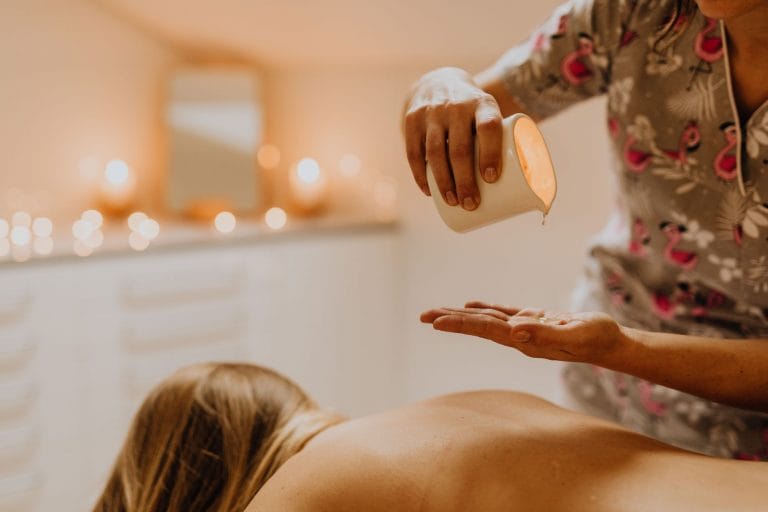
Within our sanctuary, rose and frankincense are rarely offered as a single note. Instead, they are layered into multi-sensory experiences designed to guide the nervous system through a full arc of release. A treatment might open with a warm frankincense-infused steam to settle the breath, move into rose-oil-anointed bodywork to ease the fascia, and close with a stillness practice that allows the calming effects to root in the body rather than dissipate the moment the guest rises from the table.
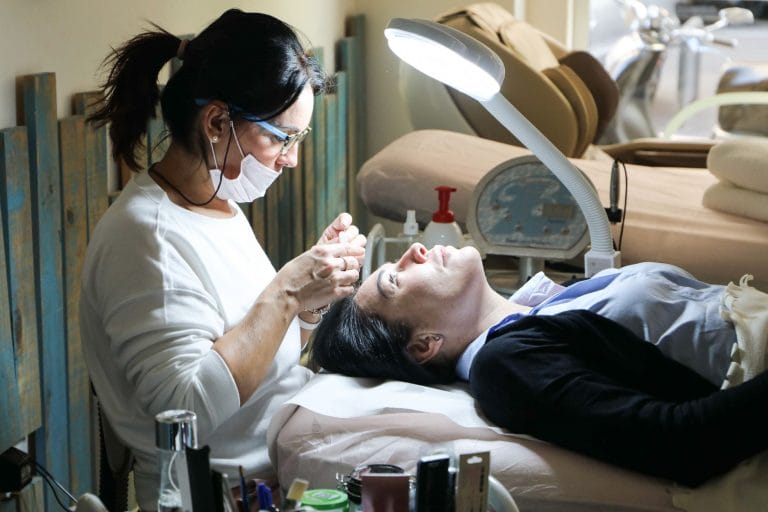
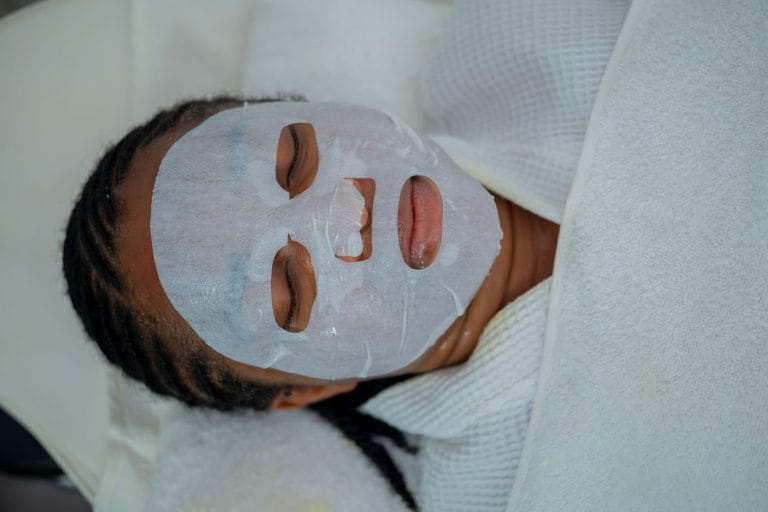
Guests drawn to this kind of aromatic depth often find a natural home in our signature sensory rituals, where botanicals, warmth, and bodywork are choreographed together rather than delivered piecemeal. For those whose skin craves the same restorative philosophy, our botanical facial rituals often incorporate rose-derived hydrosols and resin-infused balms to calm both complexion and nervous system in tandem.
Beyond Relaxation: Aromatherapy as Energetic Support
Beyond their measurable physiological effects, rose and frankincense have long been associated with emotional and energetic clearing — rose linked to matters of the heart, frankincense to grounding and spiritual clarity. Guests seeking this dimension of the work often pair aromatic bodywork with our holistic energy treatments, where scent becomes one more instrument in a broader practice of emotional and energetic recalibration.
Why Consistency Matters More Than Intensity
One detail often lost in conversations about calming scents is that their power lies less in potency and more in repetition. A single deeply aromatic session can shift the body’s state for hours, but the true recalibration of the nervous system — the kind that changes how a person carries stress in their shoulders, jaw, or breath — tends to emerge over sustained exposure. This is part of why we encourage guests seeking a genuine nervous system reset to consider extending their time with us, allowing scent, touch, and stillness to compound rather than simply visit.
For those ready to go beyond a single afternoon of calm, our multi-day retreat experiences are designed precisely around this principle — layering aromatic ritual, bodywork, and rest across days rather than hours, so the body has time to fully integrate the shift.
A Final Note on Scent as Medicine
We do not view rose and frankincense as decorative flourishes on a treatment menu. They are, in our estimation, some of the most quietly powerful tools available for guiding the body out of chronic activation and into the kind of deep, cellular rest that modern life so rarely permits. The science continues to catch up to what these botanicals have offered for thousands of years — but the felt experience of breathing them in, deeply and slowly, on a warm treatment table, has never needed proof.
To learn more about the philosophy guiding these choices, we invite you to read about our origins and elemental approach to wellness.
Begin Your Own Aromatic Reset
If you’re ready to feel the calming science of rose and frankincense for yourself, we welcome you to explore our full range of treatments and reserve a session designed around deep relaxation and nervous system renewal.